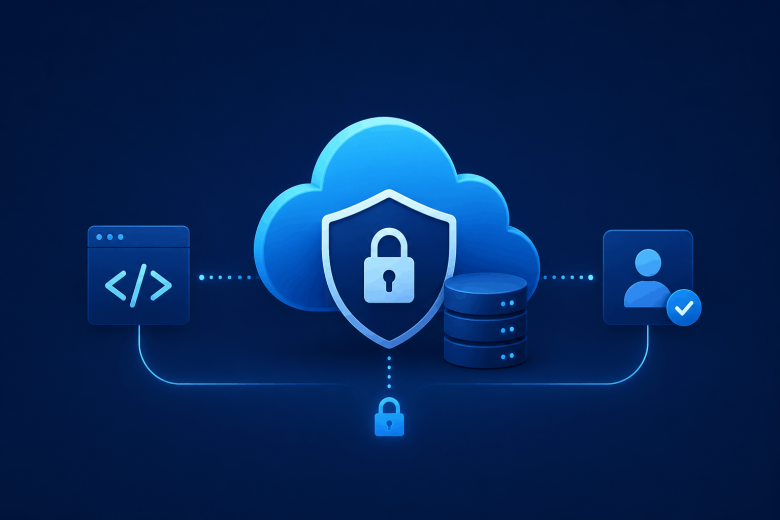
Software-as-a-Service applications handle enormous amounts of sensitive information every day. From customer records and payment data to internal business operations, modern SaaS platforms have become attractive targets for attackers. A single security weakness can expose user data, damage customer trust, and create long-term business problems.
For developers and SaaS founders, security is no longer something that can be added later. It needs to be part of the architecture, development workflow, deployment process, and operational culture from the beginning.
At the same time, enterprise customers are becoming more security conscious before purchasing any SaaS product. Many businesses now expect vendors to follow frameworks like SOC 2 requirements to demonstrate that their systems and engineering processes are secure, reliable, and properly managed.
The good news is that securing a SaaS application does not always require massive enterprise-level infrastructure. In many cases, strong security comes from consistently applying practical engineering best practices throughout the development lifecycle.
In this guide, we will look at the most important strategies developers and engineering teams can use to secure modern SaaS applications.
Understand the Shared Responsibility Model
One of the most common misconceptions in cloud-based SaaS development is assuming the cloud provider handles all security responsibilities.
Platforms like AWS, Google Cloud, and Azure secure the underlying infrastructure, including physical servers, networking hardware, and core cloud services. However, the application itself remains your responsibility.
This includes securing:
application code
APIs
authentication systems
cloud configurations
user permissions
databases
deployment pipelines
For example, storing sensitive customer data in a publicly accessible storage bucket is not the cloud provider’s mistake. It is an application configuration issue.
Understanding where your responsibility starts is the foundation of SaaS security.
Implement Strong Authentication and Authorization
Authentication and authorization failures remain among the most exploited vulnerabilities in SaaS platforms.
A secure authentication system should include:
Multi-Factor Authentication (MFA)
secure password hashing using bcrypt or Argon2
session expiration controls
brute-force protection
OAuth or Single Sign-On (SSO) support where appropriate
Weak password storage is still surprisingly common. Passwords should never be stored using outdated hashing algorithms like MD5 or SHA1.
Authorization is equally important.
Many SaaS applications accidentally expose sensitive functionality because users receive excessive permissions. Role-Based Access Control (RBAC) helps restrict users to only the resources and actions they actually need.
For example:
support agents should not access billing systems
regular users should never access admin APIs
staging environments should not expose production data
The principle of least privilege significantly reduces the impact of compromised accounts.
Secure Your APIs
APIs are the backbone of modern SaaS applications, which also makes them one of the largest attack surfaces.
Every public API endpoint should be treated as potentially exposed to attackers.
Some essential API security practices include:
validating all incoming input
implementing rate limiting
using short-lived authentication tokens
enforcing HTTPS everywhere
restricting excessive data exposure
monitoring unusual traffic patterns
Developers should also follow the OWASP API Security Top 10 recommendations to reduce common risks such as:
broken authentication
insecure object references
injection attacks
improper asset management
JWT authentication is widely used in SaaS applications, but poor JWT implementation can introduce vulnerabilities. Tokens should have expiration times, secure signing algorithms, and proper validation checks.
Another important practice is avoiding overly verbose API responses. Exposing internal IDs, database structures, or unnecessary fields can help attackers map your system.
Encrypt Sensitive Data
Encryption should be considered mandatory for modern SaaS platforms.
Data should always be encrypted:
in transit using HTTPS/TLS
at rest within databases and storage systems
Sensitive information may include:
customer records
payment data
internal business documents
authentication credentials
API keys
Developers should also avoid hardcoding secrets directly into source code repositories.
Instead, use secure secrets management solutions such as:
AWS Secrets Manager
HashiCorp Vault
Google Secret Manager
encrypted environment variables
Credential rotation policies further reduce long-term exposure risks.
Even internal development tools should follow secure credential management practices.
Secure Your Cloud Infrastructure
Cloud misconfigurations remain one of the leading causes of SaaS security incidents.
Engineering teams should regularly review:
firewall rules
IAM permissions
public network exposure
storage access policies
database configurations
Production environments should remain isolated from development systems whenever possible.
A few important infrastructure security practices include:
disabling unused ports
limiting SSH access
enforcing private networking
using temporary credentials
enabling cloud audit logs
Infrastructure as Code (IaC) tools like Terraform make deployments more consistent, but insecure templates can also replicate vulnerabilities at scale.
Security reviews should be part of every infrastructure change.
Build Secure CI/CD Pipelines
Modern SaaS applications rely heavily on CI/CD pipelines for rapid deployments. However, insecure pipelines can become high-value attack targets.
A secure CI/CD workflow should include:
protected branches
mandatory pull request reviews
automated testing
dependency scanning
secret detection
artifact verification
Supply chain attacks have increased significantly in recent years, especially through compromised open-source dependencies.
Developers should:
regularly update dependencies
remove unused libraries
pin package versions
verify trusted package sources
Automated security scanning tools can help identify vulnerabilities before deployment, but human code reviews remain critical.
Security should become part of the deployment pipeline instead of a separate afterthought.
Monitor Logs and Detect Threats
Strong monitoring helps engineering teams detect suspicious behavior before it becomes a major incident.
Every SaaS application should maintain centralized logging for:
authentication attempts
API access
infrastructure activity
deployment changes
administrative actions
Monitoring systems should generate alerts for:
repeated failed logins
unusual traffic spikes
privilege escalation attempts
abnormal API usage
unauthorized configuration changes
Logs also become extremely valuable during compliance audits and incident investigations.
Many SaaS companies underestimate incident response readiness until a real issue occurs. A documented response process helps teams act quickly during emergencies.
This includes:
defining escalation paths
assigning responsibilities
documenting communication procedures
preserving forensic evidence
Regularly Test Your SaaS Security
Security testing should be continuous, not occasional.
Some important testing approaches include:
penetration testing
vulnerability scanning
static code analysis
dynamic application testing
dependency auditing
Even well-designed systems can develop vulnerabilities as the application evolves.
Third-party libraries deserve special attention because outdated dependencies frequently introduce security risks into production environments.
Regular internal security reviews also help teams identify:
outdated access permissions
insecure configurations
unused infrastructure resources
weak operational processes
Protect Customer Data and Privacy
Customer trust is one of the most valuable assets for any SaaS business.
Developers should clearly understand:
where customer data is stored
who can access it
how it is encrypted
how long it is retained
Access to sensitive data should always be logged and monitored.
Backup and disaster recovery planning are equally important. Even secure applications can experience outages, accidental deletions, or ransomware attacks.
Reliable backup strategies should include:
automated backups
recovery testing
geographic redundancy
secure backup encryption
As SaaS companies grow, they often need to demonstrate security maturity through compliance frameworks. This is where platforms like SOCLY.io become useful by helping teams organize controls, collect evidence, and simplify audit preparation without disrupting engineering workflows.
Create a Security-First Engineering Culture
The most secure SaaS applications are built by teams that treat security as part of engineering rather than a separate department.
Security awareness should become part of daily development practices through:
secure coding standards
code review processes
internal training
threat modeling discussions
infrastructure review procedures
A strong security culture encourages developers to proactively identify risks instead of waiting for audits or incidents.
This “shift-left” approach allows teams to catch vulnerabilities earlier during development when they are significantly easier and cheaper to fix.
Security should ultimately support development speed and reliability, not block it.
Final Thoughts
Securing a SaaS application is an ongoing engineering process that evolves alongside the product itself.
Strong SaaS security comes from combining:
secure authentication
protected APIs
encrypted data
cloud infrastructure security
monitoring
incident readiness
secure development workflows
Many of these practices also naturally support modern compliance expectations and help SaaS companies build trust with enterprise customers.
When security becomes part of everyday engineering culture, teams can move faster with greater confidence while building applications that are reliable, scalable, and resilient against modern threats.
The post How to Secure a SaaS Application: Complete Guide for Developers appeared first on The Crazy Programmer.