Is your business generating tons of data, and you feel like much of it is going to waste?
Most companies struggle to turn raw data into actionable insights that drive growth and innovation. On the other hand, top data analytics companies implement data science and analytics strategies to improve business performance.
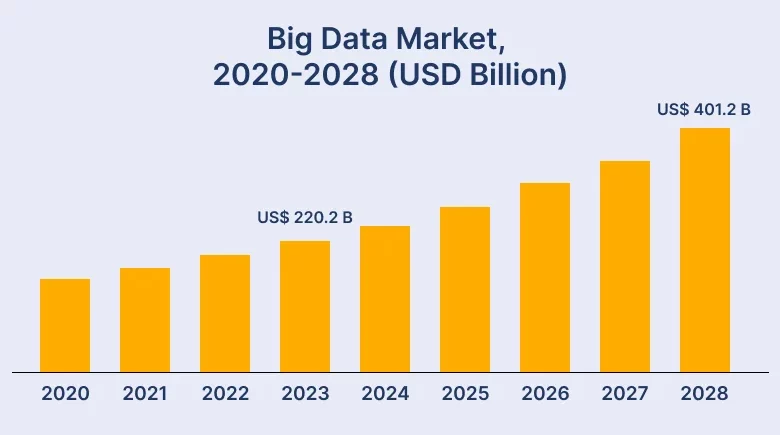
According to a MarketsandMarkets report, the demand for top data engineers and scientists is reshaping industries as the big data market is racing toward US$401.2 billion by 2028 from US$220.2 in 2023.
But many businesses face a common question: Data Engineer or a Data Scientist?
Let’s help you make this choice. The right decision can turn your data challenges into real business success.
Who is a Data Engineer?
A data engineer optimizes data infrastructure for data collection, management, and transformation. They create a pipeline converting raw data into usable data in favor of the organization.
Hire data engineering services and transform your raw data to create impactful strategies for your business success.
The core data engineer’s responsibilities
Building and maintaining data pipelines
Data storage and infrastructure management
Ensuring data quality and reliability
Optimizing data flow
We provide top data engineers to optimize, manage, and scale your data operations.
Who is a Data Scientist?
A data scientist analyzes and processes large structured and unstructured data by data engineers. Their expertise in data analytics and designing frameworks helps create actionable plans.
Partner with a trusted firm to hire expert data scientists for your business to unlock valuable insights and drive your projects forward.
The core activities of Data Scientist
Extracting meaningful insights
Developing predictive models and algorithms
Data Visualization
Experimentation and hypothesis testing
Presenting Findings to Stakeholders
Key Differences: Data Engineer vs. Data Scientist
The responsibilities and skills of a data engineer and a data scientist overlap, but there are distinct differences. Here is the comprehensive comparison of a data engineer vs a data scientist.
1. Core Focus and Objective
Data Engineer
Focuses on the infrastructure for data management. They build, maintain, and optimize pipelines, ensuring data is clean, accessible, and well-organized.
Data Scientist
Specializes in analysis and insights. They interpret data, uncover patterns, and develop predictive models to guide strategic decisions.
Key Difference: Data engineers enable data flow; data scientists extract value from it.
Also Read – Most Advanced Data Analytics Techniques Every Business Should Know
2. Responsibilities
Discussing the data scientist and data engineer’s responsibilities
Data Engineer:
Create robust data pipelines and architecture.
Consolidate, cleanse, and structure data from various sources.
Ensure the system supports large-scale data processing efficiently.
Optimize data storage and integration with analytics tools.
Data Scientist:
Analyze and model data to discover trends and insights.
Build predictive models using machine learning algorithms.
Collaborate with stakeholders to solve business problems.
Visualize findings and communicate them effectively to decision-makers.
Key Difference: Engineers prepare data; scientists analyze and model it.
Also Read – Top 10 Data Analytics Companies Globally
3. Skills and Tools
Let’s explore the tools & skills required for data scientists and engineers.
Data Engineer:
Skills: Database systems (SQL, NoSQL), ETL tools, API integration, data warehousing.
Tools: Hadoop, Apache Spark, AWS Redshift, MongoDB, Snowflake.
Data Scientist:
Skills: Statistics, machine learning, data visualization, programming (Python, R).
Tools: TensorFlow, SAS, Matplotlib, Jupyter Notebook, Tableau.
Key Difference: Engineers focus on infrastructure; scientists emphasize analytics and modeling.
Also Read – Common Mistakes in Recruiting Data Science Talent for Software Development
4. Collaboration
Data Engineer
Works closely with data scientists to provide clean and structured data to analyze.
Data Scientist
Data engineers provide reliable datasets and a scalable system for conducting analyses.
Key Difference: Engineers set the stage; scientists deliver the performance.
Get a free expert consultation and make a data-driven hiring decision
Data Engineers and Data Scientists: Two Sides of the Same Coin
Think of building a successful data strategy like constructing a modern skyscraper. You need both the people who build the foundation and structure (Data Engineers) and those who make sense of how people use the building (Data Scientists). Let’s break down how these roles work together to help businesses grow.
Data Engineers are like master builders who create the pipelines and systems that handle your company’s information. They make sure:
Your data flows smoothly from one place to another
Information is stored safely and can be easily accessed
Systems can handle growing amounts of data without breaking
Everything works together seamlessly
Data Scientists are like detectives who dig through information to find valuable insights. They help by:
Spotting patterns in customer behavior
Predicting future trends
Solving complex business problems
Turning numbers into actionable strategies
Also Read – Top Data Engineering Platforms in 2025 & Beyond: A Comparative Analysis
Use Cases for Data Engineer vs Data Scientist
When to Use Data Engineering
Bring in Data Engineers when you need to:
Build Real-Time Information Systems
Example: A shipping company tracking thousands of packages live
Result: Customers know exactly where their packages are at any moment
Create a Central Data Hub
Example: A retail chain combining sales data from all stores
Result: Better inventory management and customer service
Move to Cloud Systems
Example: A growing company needing more flexible data storage
Result: Faster access to information and lower costs
When to Use Data Science
Bring in Data Scientists when you want to:
Predict Future Trends
Example: A fashion retailer forecasting next season’s hot styles
Result: Better inventory decisions and higher sales
Spot Unusual Patterns
Example: A bank identifying suspicious transactions
Result: Better security and fewer losses
Personalize Customer Experiences
Example: A streaming service suggesting shows you’ll love
Result: Happier customers who watch more content
Get top talent to forecast trends and refine your business strategy.
Choose ValueCoders for Data Analytics Consulting Services
We have mentioned everything you need to know about data engineers and data scientists to choose the right expertise. If you still have any queries, we also offer expert data consulting services to help you understand your business requirements.
From consulting to providing you with experts, ValueCoders is your trusted partner in the growing business landscape. We help you make strong decisions for your business.
Our service Includes:
Expert analysis and advice on your IT infrastructure to enhance performance.
Insights and strategies to navigate the complexities in business.
Focus on enabling you to do what you do best—growing your business.
Contact us today, and we’ll help you determine the best path forward for meeting your unique business needs. But many businesses face a common question: Data Engineer or a Data Scientist?
Let’s help you make this choice. The right decision can turn your data challenges into real business success.
The post Does Your Business Need a Data Engineer or Data Scientist? appeared first on ValueCoders | Unlocking the Power of Technology: Discover the Latest Insights and Trends.